
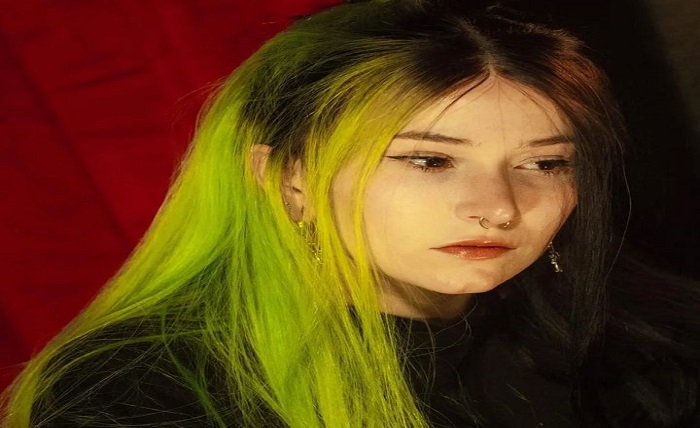
Nobody plans virality. You post a harp cover at 11pm because you’re bored, and eighteen months later strangers know your face better than your own name. That’s the actual arc behind BigTittyGothEgg, and it’s a more useful case study than most of the “personal branding” content clogging LinkedIn.
Leah didn’t set out to build a persona. She combined two things she already loved, gothic aesthetics and classical harp, and posted about it because that’s what you do on TikTok. One clip did nothing. The next did nothing. Then one did something. That’s the entire mechanism. No funnel, no growth hacker, no seed round.
What’s more interesting than the virality itself is what happened after: the name. “BigTittyGothEgg” started as a label other people slapped on her, something closer to a comment-section joke than a brand decision. She could have fought it, deleted the clips, gone quiet. Instead she claimed it. That’s the pivot point that actually matters here, not the algorithm luck, the decision to own something bold and a little ridiculous rather than run from it.
There’s a pattern underneath that decision, and it shows up far outside gothic harp content. When an audience wants something the mainstream platform won’t fully embrace, whether that’s an unconventional creator identity or an entertainment option that’s technically off-limits in a given state, people don’t stop wanting it. They just route around the restriction. That’s exactly what’s happening across Texas right now, where residents without a legal in-state casino still find their way to online casinos in Texas through offshore-licensed platforms, the same instinct that turned a niche TikTok aesthetic into something with actual commercial weight.
Goth subculture has always had this quality. It’s underground until, suddenly, it’s a red carpet look or a Hot Topic aisle. The suppression never really kills the appetite. It just delays the mainstream catching up, and whoever’s already there when it does gets the attention.
The Anonymity Phase Is Doing More Work Than People Think
Here’s the part most “how I went viral” retrospectives skip. Before Leah was a public figure, she was anonymous. Faceless clips, no real name attached, nothing but the music and the aesthetic. That anonymity wasn’t incidental. It’s the standard on-ramp for almost every internet persona that eventually goes mainstream.
Researchers at the Association for Psychological Science have written about how anonymity changes behavior online, often for the worse in comment sections, but the flip side gets less attention: anonymity also lowers the stakes enough for people to try something weird in public. You can post the harp cover, the makeup look, the joke video, without your name attached to the risk of it flopping. If it works, you decide later whether to step into the light. If it doesn’t, nobody knows it was you.
That sequencing, anonymous first, identity second, isn’t unique to creators. A study covered by The Conversation found that stable pseudonyms actually produced more civil, more consistent behavior than platforms demanding real names upfront. The pseudonym gives you room to build a coherent identity before the real-world consequences show up. BigTittyGothEgg existed as a pseudonym long before Leah did any press.
Owning the Bold Name Is a Business Decision, Not Just a Confidence Move
People frame Leah’s decision to keep the name as an act of self-acceptance, and it partly is. But look at it from a purely commercial angle for a second. A forgettable name gets forgotten. A name people can’t stop repeating, even while laughing at it, gets repeated. That’s free distribution.
This is the same math behind why some of the boldest brands in gambling and entertainment lean into names that sound almost too much: they know memorability beats politeness every time.
Three things had to happen for the ownership move to actually pay off:
- The persona had to survive scrutiny once the anonymity dropped. Random internet comments are cheap. Sustained public attention is not.
- The content had to keep delivering after the initial curiosity spike. Virality gets you the first million views. Consistency gets you the next ten million.
- The creator had to actually monetize the moment instead of just enjoying it. Plenty of viral names fade because nobody converts attention into anything durable.
Leah’s model tracks closely with what MIT Technology Review has documented about pseudonymous identity formation online, where a persona becomes durable precisely because it’s separable from the legal name behind it. It can be marketed, licensed, and built on in ways a personal Instagram never could.
Why This Maps Onto Texas and Gambling More Than You’d Expect
Stick with me here, because the connection isn’t a stretch once you see it. Texas has no legal, state-regulated online casino industry. None. The legislature has debated it multiple times and it keeps dying in committee. The Texas Tribune reported in early 2025 that gambling expansion bills keep getting filed and keep getting killed, and that pattern has held into the current session too.
And yet demand for online casino gaming among Texans hasn’t dropped. It’s just moved to platforms operating outside the state’s restricted framework, the same offshore-licensed sites that dominate search results whenever anyone types “online casino Texas” into Google. The restriction didn’t eliminate the audience. It just meant the audience found its version of the anonymous TikTok clip: a workaround that lets them do the thing they already wanted to do, minus the mainstream stamp of approval.
I’m not going to pretend every offshore casino operating in this space is squeaky clean. Plenty aren’t. But the demand-meets-restriction dynamic is identical to what happened with goth aesthetics and harp covers on a platform that wasn’t originally built for either. Suppress the mainstream path and people build an alternative one. Sometimes it’s a subculture finding its audience. Sometimes it’s a state’s residents finding a workaround. Same mechanism, different industry.
What Creators (and Everyone Watching Them) Should Actually Take From This
The lesson isn’t “post weird stuff and hope.” It’s narrower than that. Anonymity buys you room to experiment without your identity absorbing the risk. A bold, even uncomfortable name creates distribution other names can’t. And once an audience exists, whether that audience is drawn to gothic harp content or to a form of entertainment their state hasn’t caught up to yet, the smartest move is rarely fighting the label. It’s owning the thing that’s already working and building on it deliberately instead of accidentally.
Not every viral moment survives contact with a real business plan. Most don’t. The ones that do tend to share this exact sequence: quiet start, unplanned spike, and then a deliberate decision to lean into whatever made it land in the first place.
FAQ
How did BigTittyGothEgg go viral on TikTok? Leah posted harp covers and gothic-aesthetic clips anonymously without expecting traction. A handful of videos gained modest views before one clip broke out significantly, at which point the audience discovered the account and the persona took on a life beyond the individual videos.
Why did Leah keep the name BigTittyGothEgg instead of rebranding? The name originated from audience commentary rather than personal branding, but its memorability created organic distribution that a safer name couldn’t match. Owning it converted an internet joke into a recognizable, marketable identity.
Is online casino gambling legal for residents of Texas? Texas has no state-regulated online casino framework as of 2026, and repeated legislative attempts to change that have failed. Residents interested in online casino gaming typically use offshore-licensed platforms operating outside Texas’s borders.
Does anonymity help or hurt online creators long-term? Early anonymity generally helps by lowering the stakes of experimentation, letting creators test formats and personas before their real identity carries the risk. Long-term success then depends on whether the persona holds up once the creator steps into public view.
What made BigTittyGothEgg’s persona commercially successful rather than just viral? Consistency after the spike mattered more than the spike itself. Leah kept producing harp and gothic-aesthetic content that matched the persona people had already connected with, and she converted attention into an actual online presence and business rather than letting the moment pass.
Gambling involves risk. Please play responsibly and only wager what you can afford to lose. If you feel gambling is becoming a problem, visit BeGambleAware.org or call 1-800-GAMBLER.
Whatever platform builds your audience, mainstream or workaround, the ones that last are the ones that stop treating the moment as luck and start treating it as a foundation.