
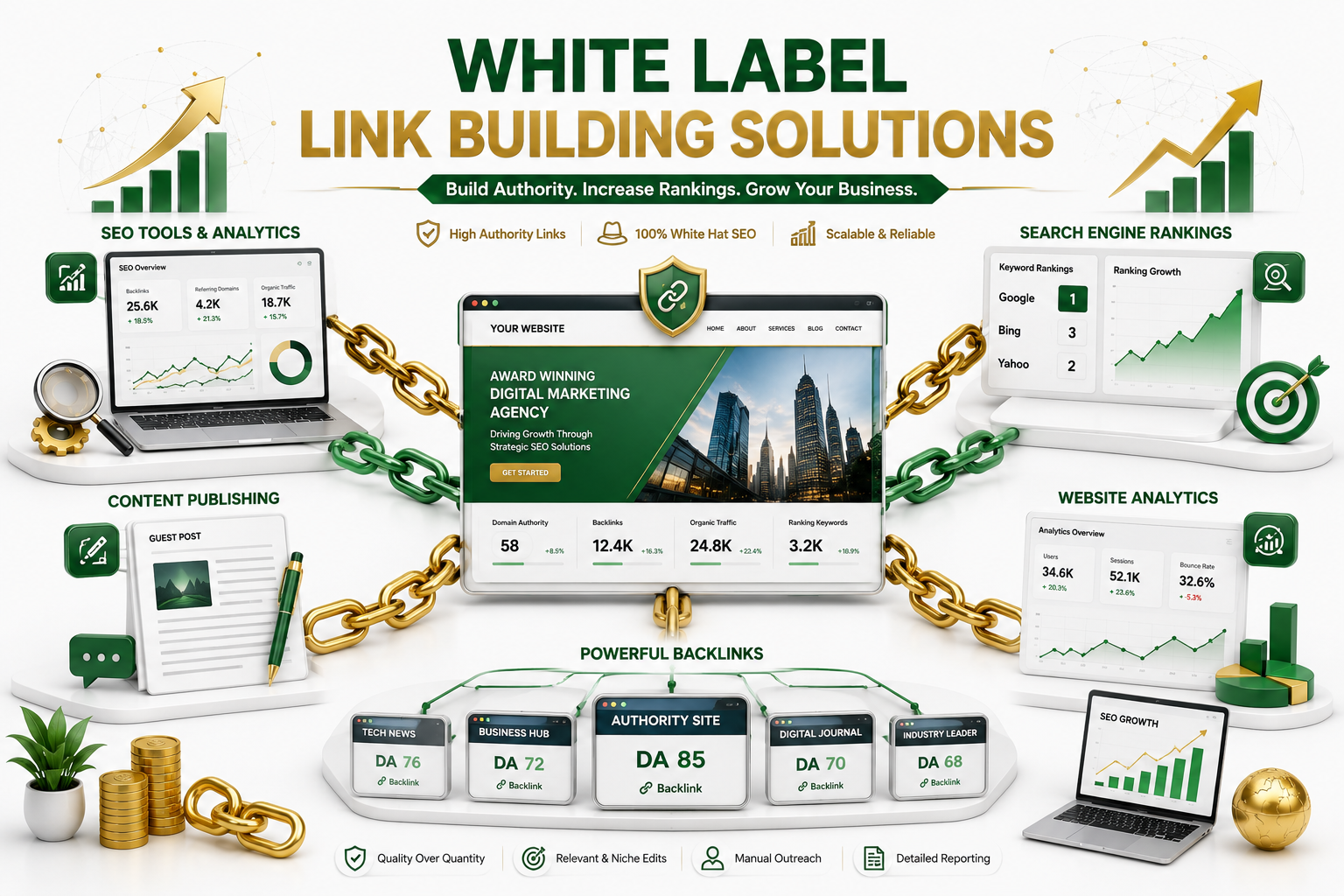
Every agency owner knows the feeling. You land a new client, promise strong SEO results, and then realize your team has no time left for outreach. This is exactly why so many agencies now turn to white label link building solutions instead of stretching their staff too thin. This article breaks down what these services really offer, how they work behind the scenes, and what to check before you trust a provider with your client’s website. Let’s dig in, no fluff, just the practical stuff you actually need to know.
Breaking Down What This Service Really Means
White label link building solutions let one company do the outreach and link placement work, while your agency keeps full credit with the client. The client sees your logo, your reports, and your name on every email. They have no idea another team is doing the heavy lifting behind the scenes.
Picture a restaurant that orders bread from a local bakery instead of baking it in-house. Diners still enjoy fresh bread with the restaurant’s name on the menu. Nobody asks who actually baked it, as long as it tastes good. That is the exact idea behind white label link building solutions.
Why So Many Agencies Are Making the Switch
Building links takes patience and a specific skill set. You need to find the right websites, write emails that actually get replies, and build long-term relationships with editors. Not every agency has time or staff for that kind of daily grind.
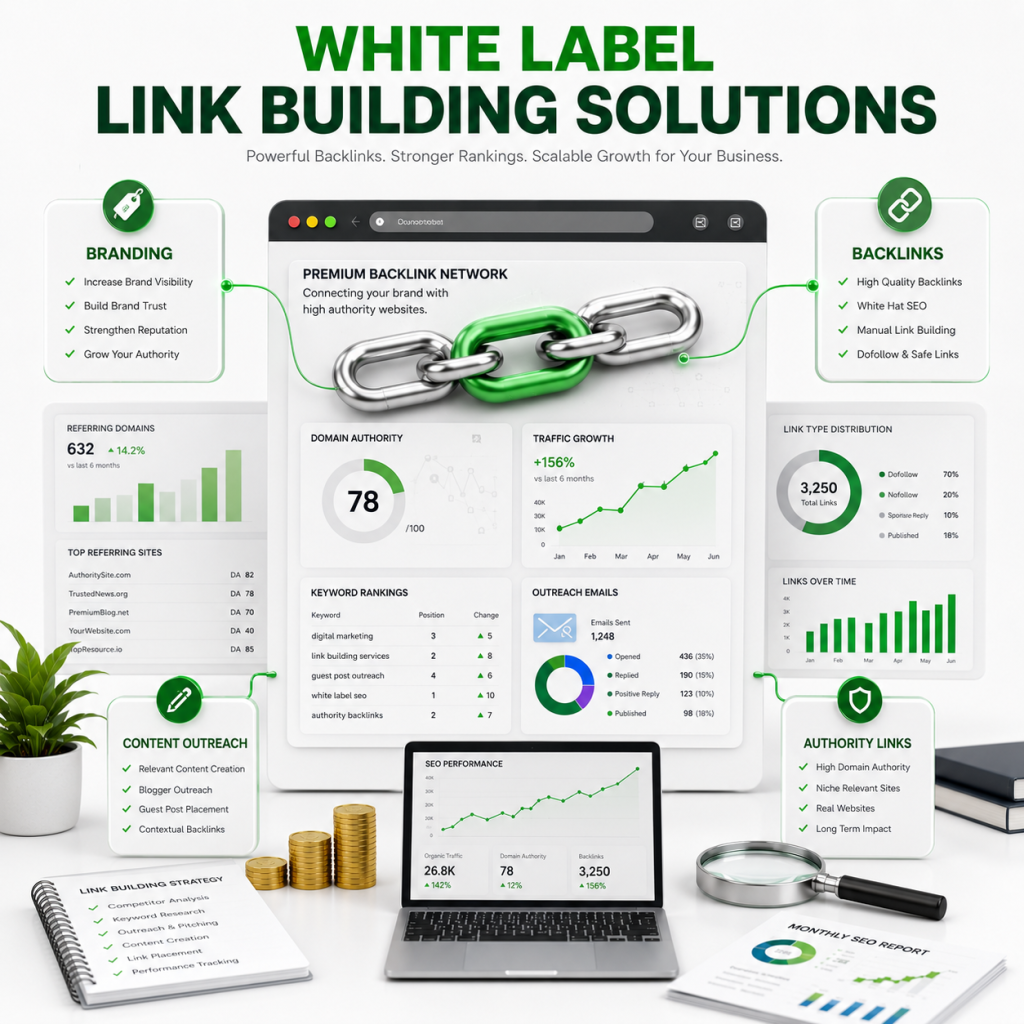
By outsourcing this piece of SEO, agencies free up hours for client meetings, strategy calls, and content planning. Small agencies especially benefit, since hiring a full outreach team is often too expensive for their size. This is one of the biggest reasons white label link building solutions keep growing in popularity.
A Look Inside the Link Building Process
The steps behind white label link building solutions are simpler than most people assume. Here is how a typical campaign usually flows.
- Your agency shares client goals, niche, and target keywords with the provider.
- The provider researches websites that match the client’s industry.
- Their team reaches out to site owners with a pitch or guest post idea.
- Once approved, they write or supply content for the link placement.
- The link goes live, and you receive a report to share with your client.
Most providers give you access to a dashboard so you can track everything without back-and-forth emails. You set your own price for clients and keep the difference as profit. This setup makes white label link building solutions attractive for agencies that want steady income without extra staffing costs.
The Outreach Side Nobody Talks About Enough
Outreach sounds simple until you actually try it. Sending a hundred emails means nothing if nobody replies. The real skill lies in finding the right contact, writing a message that feels personal, and following up without sounding pushy.
Experienced outreach teams also know how to spot fake or low-quality websites. A site might look active but actually get almost no real visitors. Skilled providers filter these out before they waste time pitching a dead-end site.
Do Backlinks Still Matter for Rankings?
Yes, and this question comes up a lot. Search engines still treat backlinks as a trust signal. When other respected websites link to a page, it tells search engines that the content is worth showing to users.
That said, quality beats quantity every time. Five links from well-known, relevant sites will do more for rankings than fifty links from random, unrelated blogs. This is exactly why picking a careful provider for white label link building solutions matters so much.
Spotting the Difference Between Strong and Weak Links
Not every link helps a website. Some can actually hurt rankings if they come from spammy or unrelated sources. Here is a quick table that makes the difference clear.
| Link Quality Factor | Strong Link | Weak Link |
|---|---|---|
| Website relevance | Matches client’s niche | Random, unrelated topic |
| Authority score | Medium to high | Very low or flagged |
| Where it sits | Inside real content | Buried in a footer or sidebar |
| Site traffic | Gets real visitors | Barely any visitors |
| Content around it | Well written and useful | Thin, copied, or spun text |
This table shows why blindly trusting cheap link packages can backfire. A careful review process protects your client’s site from penalties down the road.
How to Vet a Link Building Provider
Not every provider plays by the rules. Some rely on private blog networks or paid link schemes that can get a client’s site penalized. Knowing how to check a provider before signing up saves you from a painful cleanup later.
Ask for sample reports and real examples of past work. A provider confident in their process will show you proof without hesitation. If they dodge specific questions about their outreach methods, treat that as a warning sign.
Smart Questions to Ask Before Committing
Before choosing white label link building solutions, run through this short checklist:
- Do they use real outreach or automated blasts?
- Can they show live links from past campaigns?
- Which industries do they know best?
- Do they handle content writing too, or just outreach?
- What is their policy if a link disappears later?
A trustworthy partner answers these without dodging or stalling. If something feels vague or rushed, take your time before signing any contract.
Checking Real Metrics Instead of Sales Talk
Numbers tell the real story, not marketing pitches. Ask for domain authority scores, estimated traffic, and niche relevance for every site they plan to use. This gives you a clear picture of what your client is actually paying for.
Sites like the one found at linkranker.org focus on connecting agencies with checked publishers and transparent reporting, which makes this kind of research much easier before a campaign starts. Taking this extra step upfront saves a lot of trouble later.
Understanding the Cost of Quality Links
Pricing for white label link building solutions changes based on niche, site quality, and how many links a campaign needs. Some providers charge per link, while others sell monthly bundles. Neither option is automatically better, it depends on the client’s goals and budget.
A single link on a respected site might cost more than ten links from smaller pages. That higher price often makes sense, since one strong link can outperform a stack of weak ones. Agencies should explain this to clients so nobody feels confused about pricing later.
Setting a Fair Markup for Your Clients
Agencies typically add a markup when reselling these services. This covers your time spent managing the account, writing reports, and answering client questions. A markup between twenty and fifty percent is common, though it varies by market.
Keep pricing honest and clear. Clients talk to each other, and word travels fast in most industries. Fair pricing builds trust, and trust keeps clients renewing month after month.
Mistakes That Hurt Agency Link Building Campaigns
Even experienced agencies slip up sometimes. Spotting these mistakes early can save a lot of wasted budget. Let’s walk through the most common ones. Chasing link volume over quality is a big one. A report full of links looks impressive, but it means nothing if the links come from weak, unrelated sites. Ignoring niche relevance is another common slip, since search engines notice when links look random or unnatural.
Simple Fixes That Make a Big Difference
Always ask how a provider chooses target websites before starting a campaign. Relevance should come first, every single time. A backlink from a site close to the client’s industry carries far more weight than one from an unrelated field. Also, avoid judging results too early. Link building takes time to show results, usually a few months rather than a few weeks. Patience pays off much more than chasing quick wins.
Signs You Can Trust Your Link Building Partner
Trust matters more than flashy sales pitches. A few clear signs point to a provider worth working with long term. They explain their process in plain language instead of hiding behind vague buzzwords. They give realistic timelines instead of promising instant results. They also show real, working links instead of screenshots that could easily be faked.
Good providers stay honest about limits too. Nobody can guarantee a first-page ranking, no matter how good their outreach is. Anyone who promises that outcome is likely overselling their service.
Why Content Quality Still Drives Link Success
Links do not work in isolation. They sit inside a bigger SEO picture that includes content, site structure, and technical health. A client’s website needs solid pages before backlinks can do their job properly. Before starting any campaign, check that the client’s site has clear, helpful content and easy navigation. Search engines want to send visitors to pages that actually answer their questions. Once that foundation is in place, white label link building solutions can push those rankings even higher.
Pairing Fresh Content With Smart Outreach
The strongest campaigns combine new content with steady outreach. A well-written blog post gives an outreach team something worth pitching to other site owners. Nobody wants to link out to a thin, outdated page with little value. This is why many providers bundle content writing with their outreach service. It keeps the whole process connected and saves agencies from juggling two separate vendors. Always ask a potential partner if they handle content creation alongside their link placements.
Frequently Asked Questions
Is outsourcing link building safe for a client’s website?
Yes, as long as the provider uses ethical, manual outreach instead of spammy shortcuts. Avoid any provider relying on link farms or private blog networks. Safe practices protect the client’s site from search engine penalties over time.
How soon can agencies expect to see ranking changes?
Most agencies notice movement after two to four months of steady work. Link building is a gradual process, not a quick fix. Patience usually leads to stronger, more lasting results.
Do these services work for every industry?
Yes, most providers handle a wide range of industries, from local businesses to online stores. Some specialize in specific niches, so it helps to ask beforehand. Matching a provider’s experience with the client’s field usually leads to better outcomes.
What markup should agencies charge clients for this service?
A markup between twenty and fifty percent above the provider’s base cost is fairly standard. This covers account management, reporting, and client communication time. Clear, honest pricing keeps clients satisfied and loyal over time.
What if a placed link gets taken down later?
Reliable providers usually offer a replacement link or a refund for removed placements. Always confirm this policy before signing any agreement. It protects your agency’s budget and keeps client trust intact.
Wrapping Up the Key Takeaways
White label link building solutions give agencies a practical way to offer strong SEO results without hiring a full outreach team from the ground up. They save time, cut down on stress, and let your agency focus on strategy and client relationships. The real key is choosing a partner who values quality over shortcuts.
Ask smart questions, check real data, and set fair prices for your clients. Follow these steps, and white label link building solutions can become one of your agency’s most valuable services. Good backlinks take patience to build, but the long-term payoff makes the wait worth it.