
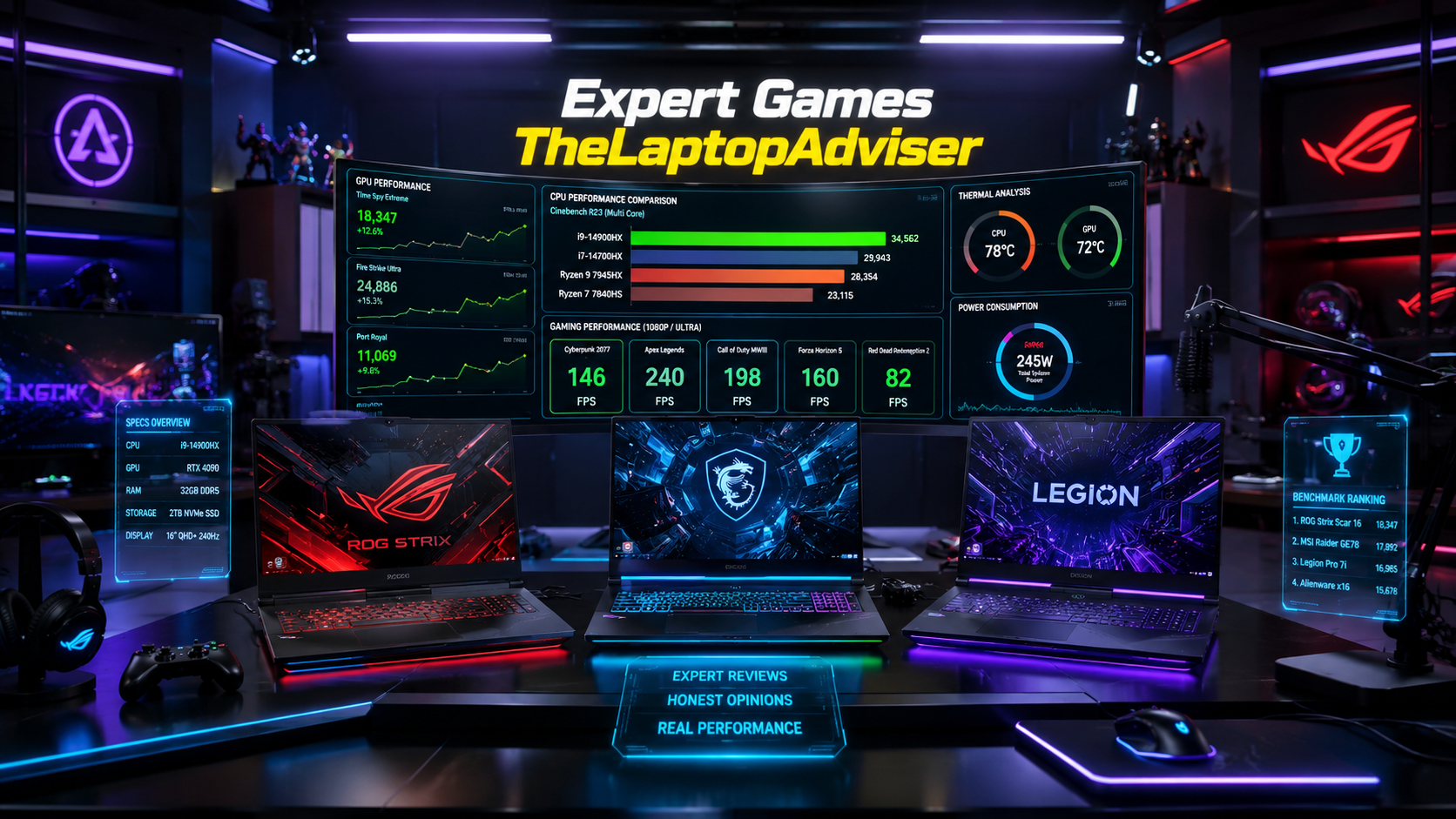
Expert Games TheLaptopAdviser: Your Complete Guide to Gaming Laptops Done Right
So you want to play games on a laptop. Good choice. But picking the right one? That part can feel overwhelming. There are hundreds of options out there, and the specs can get confusing fast. That is exactly where expert games thelaptopadviser steps in to make things easier.
This guide will walk you through everything you need to know. From choosing the right GPU to understanding refresh rates, we will cover it all in plain, simple language.
Why You Need a Trusted Source for Gaming Laptop Advice
Not every review site gives you honest advice. Some just push whatever product pays them the most. That is a real problem when you are spending $800 to $2,000 on a laptop.Expert games thelaptopadviser focuses on giving readers real, unbiased guidance. The goal is simple: help you get the most out of your money. Whether you play casual games or competitive titles, the right laptop makes a huge difference.
Gaming laptops in 2024 and 2025 have come a long way. Even mid-range machines now handle popular titles like Fortnite, Minecraft, and even Cyberpunk 2077 at solid frame rates. Knowing which ones deliver on their promises is where good advice pays off.
What Makes a Gaming Laptop Worth Buying
The GPU Is the Most Important Part
The graphics card does the heavy lifting in any gaming laptop. NVIDIA’s RTX 4060 is a strong mid-range pick. It handles most modern games at 1080p with great detail settings.If you want to step up, the RTX 4070 handles 1440p gaming well. AMD also has solid options with its RX 7000 series. Expert games thelaptopadviser often highlights that GPU choice matters more than any other spec for gaming performance.
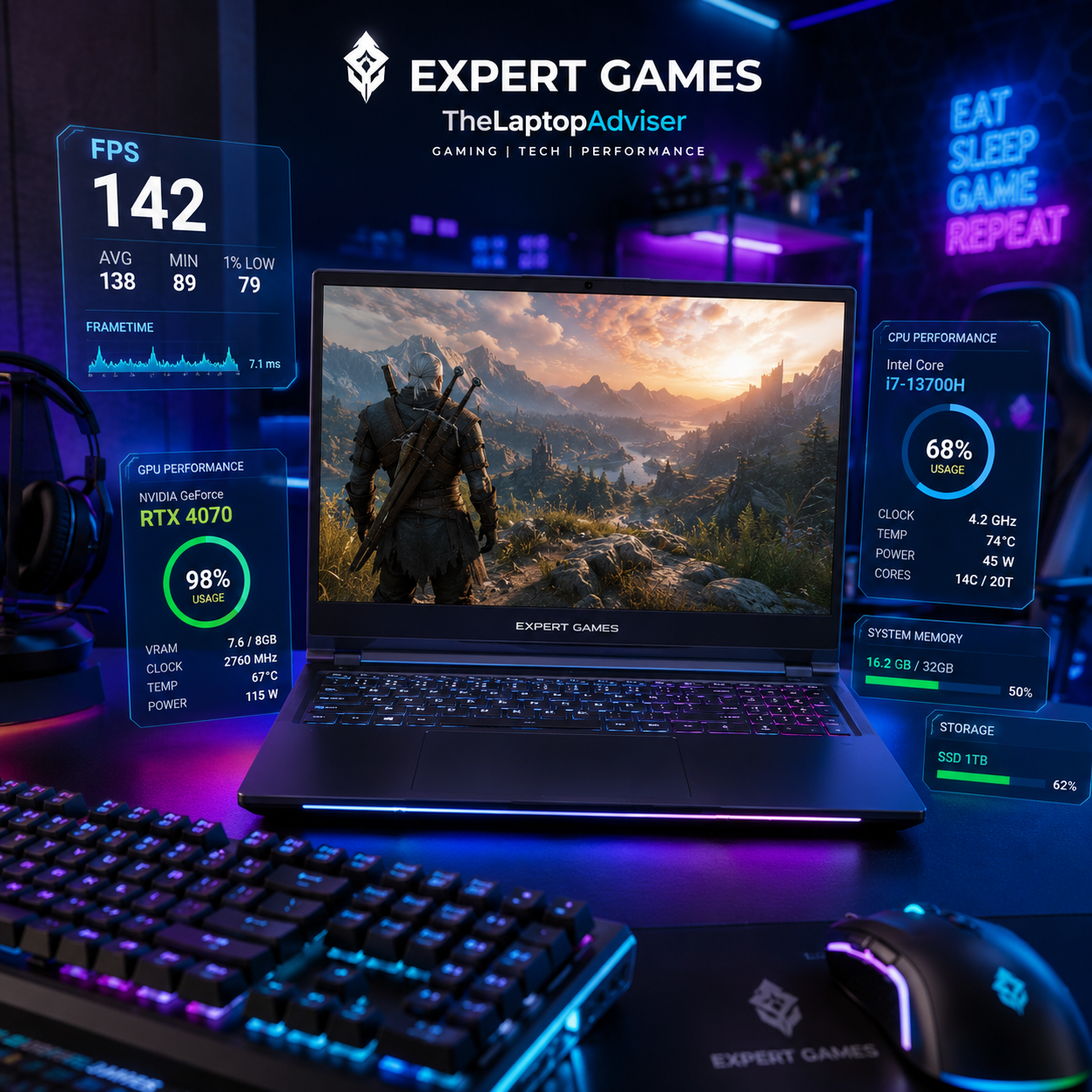
Do not just look at the name on the box, though. Check the TDP (Thermal Design Power) of the GPU. A laptop RTX 4070 with 80W TDP performs much worse than one with 115W. Always look for the wattage listed in the specs.
RAM: How Much Do You Actually Need
Most games today run fine with 16GB of RAM. Games like Hogwarts Legacy, Call of Duty, and Elden Ring all run well at 16GB. Some newer open-world titles benefit from 32GB, but it is not always necessary.DDR5 RAM is faster, but DDR4 laptops still perform well in most games. What matters more is whether the RAM runs in dual-channel mode. A single 16GB stick is slower than two 8GB sticks working together.
Storage: Go SSD, Always
A fast SSD makes games load quicker and reduces stuttering. Always pick a laptop with NVMe SSD storage. A 512GB drive fills up fast with modern games, so 1TB is a better starting point.
Top Gaming Laptop Categories Explained
| Category | Price Range | Best For | Example GPU | Expected FPS (1080p) |
|---|---|---|---|---|
| Budget Gaming | $600 – $900 | Casual and indie games | RTX 3050 / RX 6600M | 60-90 FPS |
| Mid-Range | $900 – $1,300 | Most AAA titles | RTX 4060 | 90-120 FPS |
| High Performance | $1,300 – $1,800 | Demanding AAA games | RTX 4070 | 100-144 FPS |
| Flagship | $1,800+ | Max settings, 4K | RTX 4080 / 4090 | 144+ FPS |
This table gives you a quick snapshot of what to expect at each price point. Expert games thelaptopadviser regularly tests laptops across all four categories to give you real numbers, not just marketing claims.
The Display Makes or Breaks Your Experience
Refresh Rate Matters More Than Resolution
A 144Hz screen feels much smoother than a 60Hz one. If you play fast-paced games like Valorant or Apex Legends, a high refresh rate is not optional, it is essential. Many budget gaming laptops now offer 144Hz, which is great news for shoppers.Some laptops offer 240Hz or even 360Hz displays. These are ideal for competitive players who want every advantage. For casual gamers, 144Hz is more than enough.
Resolution: 1080p vs 1440p
Most gaming laptops use 1080p panels, and that is totally fine. At a 15.6-inch screen size, 1080p looks sharp. You also get better frame rates because the GPU works less hard.1440p makes sense on larger screens (17 inches or more). The image looks crisper, but you will need a stronger GPU to hit smooth frame rates. Expert games thelaptopadviser recommends sticking with 1080p for budget and mid-range builds.
Battery Life: The Honest Truth
Gaming laptops eat battery fast. When you play games, expect 1.5 to 3 hours on battery. That is just the nature of powerful hardware.Some laptops do better. The ASUS ROG Zephyrus G14, for example, can hit 8 to 10 hours on light tasks. It drops significantly during gaming, though.
If you need to game away from a plug often, look for laptops with MUX switch support. This lets you turn off the integrated GPU and use only the dedicated one, which can improve performance while slightly improving battery in some modes.
Cooling: The Hidden Factor Nobody Talks About
Why Thermal Performance Changes Everything
A laptop that overheats will throttle its CPU and GPU. That means your $1,500 machine starts performing like a $700 one under heavy load. Expert games thelaptopadviser always runs stress tests to check for this.Good cooling systems use multiple heat pipes, dual fans, and vents on the bottom and back of the laptop. Avoid laptops with only bottom vents. Putting them on a bed or soft surface blocks airflow completely.
Thermal Paste and Long-Term Care
Over time, thermal paste dries out. This can happen after 2 to 3 years of heavy gaming use. Repasting the CPU and GPU can dramatically improve temperatures. It sounds scary, but many laptops make this fairly easy to do.Cleaning the fans once or twice a year also helps. Dust buildup reduces airflow and raises temps. A can of compressed air works great for this.
Brands You Can Trust (and One Warning)
Reliable Brands for Gaming Laptops
ASUS ROG and TUF, Lenovo Legion, MSI, and Acer Nitro are all well-regarded. These brands offer good build quality, solid cooling, and reliable driver support. Expert games thelaptopadviser has tested models from all of these and found consistent quality across their lineups.Dell’s Alienware lineup is premium and very well built, but expensive. If budget is a concern, Lenovo Legion and Acer Nitro offer better value.
One Thing to Watch Out For
Be careful with generic or no-name brands on Amazon. Some of them list impressive specs but use low-quality components. A laptop with “RTX 4060” can still disappoint if it uses a low-wattage chip and a cheap display.Always read third-party reviews before buying. Sites and resources like expert games thelaptopadviser give you a clearer picture than official product pages.
How to Pick the Right Gaming Laptop for Your Needs
For Students Who Game on a Budget
You do not need to spend a fortune to enjoy gaming. The Acer Nitro 16 with an RTX 4060 regularly comes in under $900. It handles games like GTA V, Valorant, and Fortnite with ease.Look for laptops that offer upgradeable RAM. Some budget laptops solder the RAM, which means you cannot expand it later. Upgradeable storage is also a plus. Adding a second SSD later saves money upfront.

For Serious Gamers Who Want Performance
If you play for hours daily or stream, invest in a more powerful machine. The Lenovo Legion Pro 5 with an RTX 4070 is a crowd favorite. It runs cool, looks good, and handles demanding games without breaking a sweat.Serious gamers should also look at the keyboard. A full-sized keyboard with numpad can be helpful. Anti-ghosting and per-key RGB lighting are nice extras, but do not let flashy lights distract you from performance specs.
For Content Creators Who Also Game
You need a balance between GPU power and display quality. A color-accurate IPS or OLED panel matters when editing videos or photos. Look for laptops with at least 100% sRGB coverage.The ASUS ProArt Studiobook or MSI Creator series hit this sweet spot. They are not marketed as gaming laptops, but they handle games very well. Expert games thelaptopadviser covers these crossover laptops too, which is helpful if you wear multiple hats.
Common Mistakes First-Time Buyers Make
Many people overspend on a CPU and underspend on a GPU. For gaming, the GPU is king. A Core i5 or Ryzen 5 paired with an RTX 4060 will outperform a Core i9 with a weaker GPU in almost every game.Another common mistake is ignoring the display. Buyers focus on internal specs but forget the screen they will stare at for hours. A bad panel ruins the experience, even if the FPS is high.
Finally, people skip checking the keyboard and trackpad. If you do not use an external mouse, a poor trackpad gets frustrating fast. Try to read hands-on reviews that mention the keyboard feel and trackpad quality.
A Quick Glossary of Gaming Laptop Terms
If some of these terms are new to you, here is a simple breakdown:
TDP (Thermal Design Power): How much power a chip uses and how much heat it generates. Higher TDP usually means better performance but more heat.
MUX Switch: Lets you bypass the integrated GPU to send graphics straight from the dedicated GPU to the screen. This reduces latency and often improves game performance.
G-Sync / FreeSync: Technologies that sync the GPU output with the screen refresh rate. This reduces screen tearing and makes games look smoother.
VRAM: Video memory on the GPU. More VRAM helps with higher-resolution textures. 8GB is the current sweet spot for gaming.
Expert games thelaptopadviser breaks down all of these terms in dedicated guides if you want to dig deeper.
Final Thoughts: Play Smart, Buy Right
Buying a gaming laptop is a big decision. You want something that lasts, performs well, and fits your budget. The good news is that there are great options at every price point right now.Start by deciding your budget and the types of games you play. Then focus on GPU wattage, display refresh rate, and cooling quality. Do not get swayed by looks alone.
Resources like expert games thelaptopadviser make this process easier. You get real-world testing, honest comparisons, and practical advice without all the confusing jargon. Whether you are a first-time buyer or upgrading from an older machine, solid guidance goes a long way.Take your time, compare a few models, and read reviews from people who have actually used the laptops. The right gaming laptop is out there. You just need the right advice to find it, and expert games thelaptopadviser is a great place to start that search.
FAQs About Expert Games Thelaptopadviser
Is a gaming laptop good for everyday use too?
Yes, a gaming laptop works great for everyday tasks. You can browse the web, stream videos, write documents, and join video calls without any issues. In fact, the powerful hardware makes multitasking faster than most standard laptops. Just keep in mind that battery life will be shorter compared to regular ultrabooks.
How long does a gaming laptop last before it needs replacing?
A well-built gaming laptop can last four to six years with proper care. Cleaning the fans regularly and repasting the CPU and GPU after a couple of years helps a lot. The hardware may start struggling with brand-new AAA titles after three to four years, but older and mid-range games will still run fine. Upgradeable RAM and storage can also extend the life of your machine.
Can I use a gaming laptop for school or work without looking out of place?
Absolutely. Many modern gaming laptops have a clean, professional look. Brands like ASUS TUF and Lenovo Legion offer models that do not scream “gamer” with over-the-top RGB lighting. You can turn off the lighting, close the lid, and it looks like any other laptop in a classroom or office. Expert games thelaptopadviser often highlights these understated models for people who need a dual-purpose machine.
What is the best screen size for a gaming laptop?
Most people find 15.6 inches to be the sweet spot. It gives you enough screen space to enjoy games without making the laptop too heavy to carry. If you travel often, a 14-inch model is lighter and easier to pack. If you mostly game at a desk, a 17-inch screen gives you a more immersive experience. Screen size is personal, so think about where you will use the laptop most.
Do I need to buy a gaming mouse separately?
Most gaming laptops have decent trackpads, but for serious gaming a mouse is worth it. Precise aiming in shooters and fast clicking in strategy games is much easier with a mouse. A basic wired gaming mouse from Logitech or Razer costs around $30 to $50 and makes a noticeable difference. Expert games thelaptopadviser recommends keeping a small portable mouse in your bag if you game on the go.